
01Automation reduces unnecessary operation
Lights, air-conditioning and other systems often continue operating because nobody remembers to switch them off or adjust them. Automation can use schedules, occupancy information and scenes to reduce unnecessary operation.
The goal is to make efficient behaviour easier and more consistent.
02Lighting control
Dimming, occupancy-based control and scheduling can reduce the amount of artificial lighting used when full output is unnecessary. In a well-designed system, lighting levels can be matched to the task and time of day.
Lighting efficiency also depends on the fixtures, lamps, drivers and design. Automation is only one part of the equation.
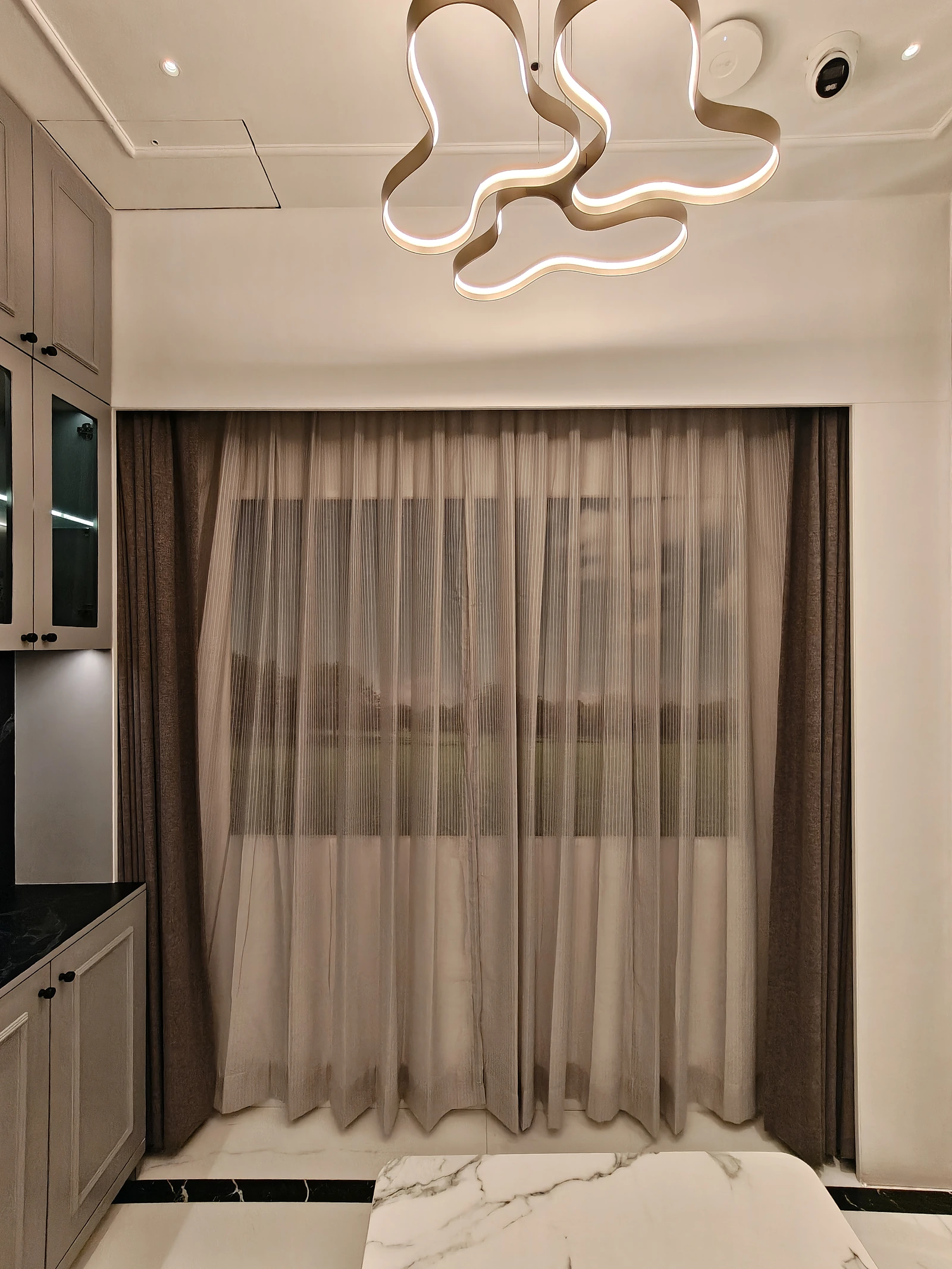
Shading that closes before the afternoon heat arrives keeps the load off the air conditioning.
03Climate and zoning
Air-conditioning can be a major energy load. Room-by-room or zone-based control can prevent every area from being treated identically when occupancy differs.
Schedules can also reduce conditioning of spaces when they are not expected to be occupied. Actual savings depend on the HVAC system, building envelope, set points and occupant behaviour.
04Shading and solar heat
Motorised blinds and curtains can respond to time, daylight or programmed conditions. Managing solar exposure can improve visual comfort and may reduce cooling demand in some situations.
Large glazed areas require careful design because shading, glazing performance, HVAC capacity and lighting all interact.
A setback temperature keeps rooms ready without running cold
05Energy monitoring and informed decisions
Monitoring can show how and when energy is being used. When combined with automation, data can support better decisions rather than relying on assumptions.
A sophisticated system can eventually coordinate multiple loads around occupancy and operating conditions, but the design should remain understandable to the homeowner.
06Why integrated automation matters
The biggest opportunity comes from systems working together. A presence sensor can influence lighting and climate; shading can respond to daylight; an away scene can coordinate several systems at once.
KNX is particularly relevant because it provides a standardised automation layer through which different building functions can communicate.
07Avoiding the ’energy-saving’ trap
Homeowners should be cautious of claims such as guaranteed percentage savings. Energy performance depends on the building envelope, equipment efficiency, usage patterns, climate and settings.
A reputable automation proposal should explain what the system is designed to do and what can be measured, rather than promising a universal result.
08Frequently Asked Questions
Can smart home automation reduce electricity bills?
It can help reduce unnecessary operation, but the actual result depends on the home, equipment, schedules and occupant behaviour.
Does KNX support energy management?
Yes. Energy management is one of the building functions that can be integrated into KNX-based automation.
Is automation alone enough for an energy-efficient home?
No. Building envelope, glazing, insulation, HVAC efficiency, lighting design and occupant behaviour are also important.
Discuss energy-conscious automation with Control Valley if you are building or renovating a home and want lighting, climate and shading considered as one system.
—Continue reading
- What Is KNX Home Automation? A Complete Guide for HomeownersWhat KNX home automation is, how it works, what it can control, and why it suits homes designed to stay useful for years.
- KNX vs Wi-Fi Smart Home: Which Is Better for a New Home?KNX vs Wi-Fi smart home explained: compare reliability, scalability, wiring, security, control, maintenance and cost before choosing automation for a new home.
- How Much Does Home Automation Cost in India? A Practical GuideUnderstand how home automation is priced in India, what shapes the budget, what a KNX project includes, and how to plan a realistic scope.