
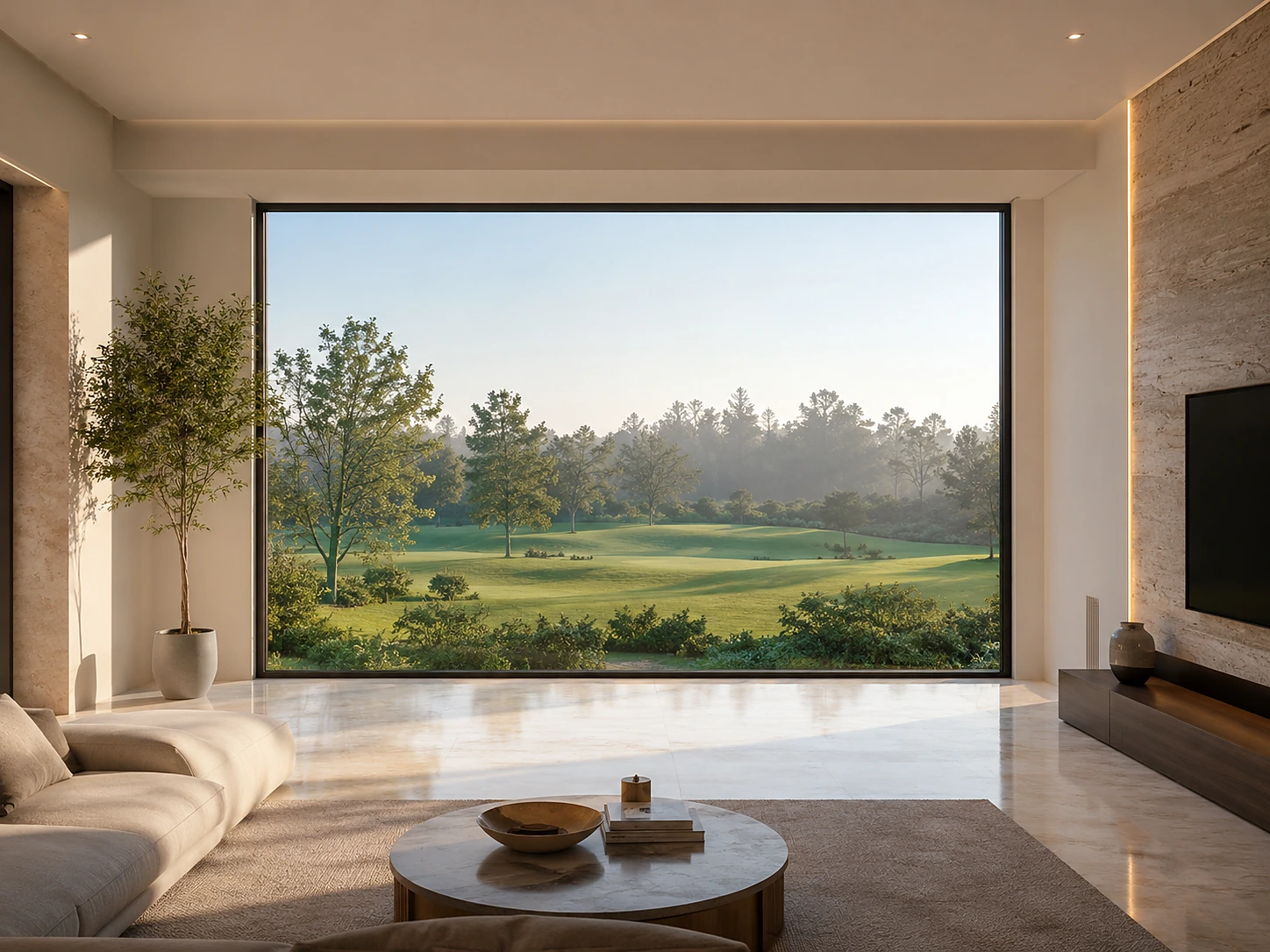
01More than opening and closing curtains
A motorised curtain system can be operated from a keypad, remote, app or automation scene. The biggest advantage is that shading can become part of a broader routine rather than a separate device.
An Evening scene might close selected curtains while setting lighting levels. A Movie scene can darken the room and prepare the AV system. An Away scene can manage selected shades according to the homeowner’s preferences.
The engineering that matters is the hidden part: the pocket detail, the track, and how quiet the motor stays.
02Privacy and comfort
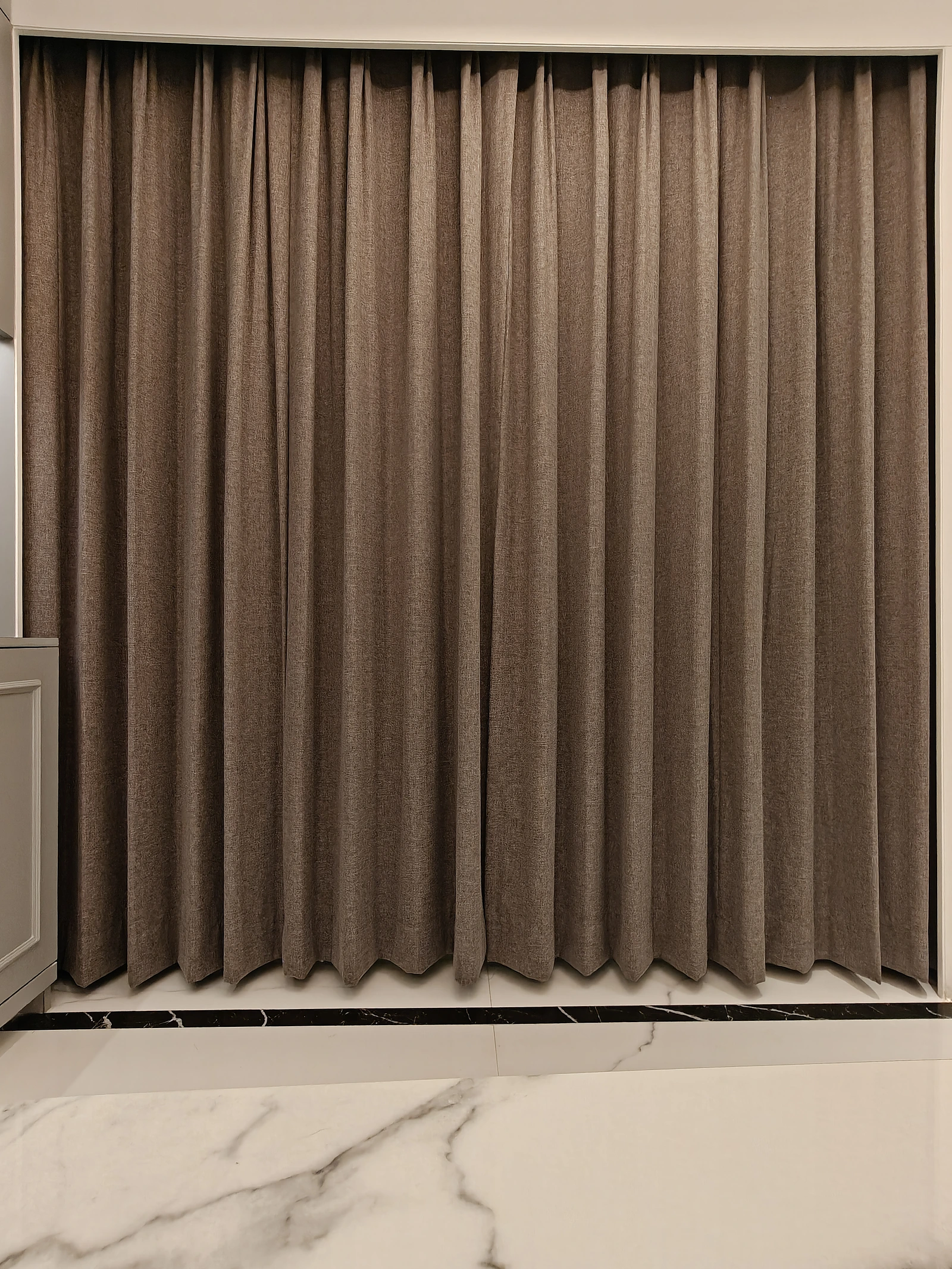
Shading is a major part of the experience of a room. Curtains can provide privacy when required and reduce glare when sunlight becomes uncomfortable.
With automation, selected curtains can follow schedules or environmental conditions, reducing the need to operate each window manually.
03Integration with lighting
Lighting and shading are naturally connected. When daylight changes, artificial lighting may need to change too. A coordinated system can create a more consistent visual environment.
This is especially useful in living rooms, bedrooms, home theatres and spaces with large windows.
04Integration with climate control
Window shading can also interact with thermal comfort. In some homes, managing solar exposure can complement air-conditioning by reducing unwanted heat gain. The exact benefit depends on glazing, orientation, fabric, building envelope and climate.
The automation system can provide the logic, but the physical performance comes from the complete window and shading design.
05What should be planned during construction?
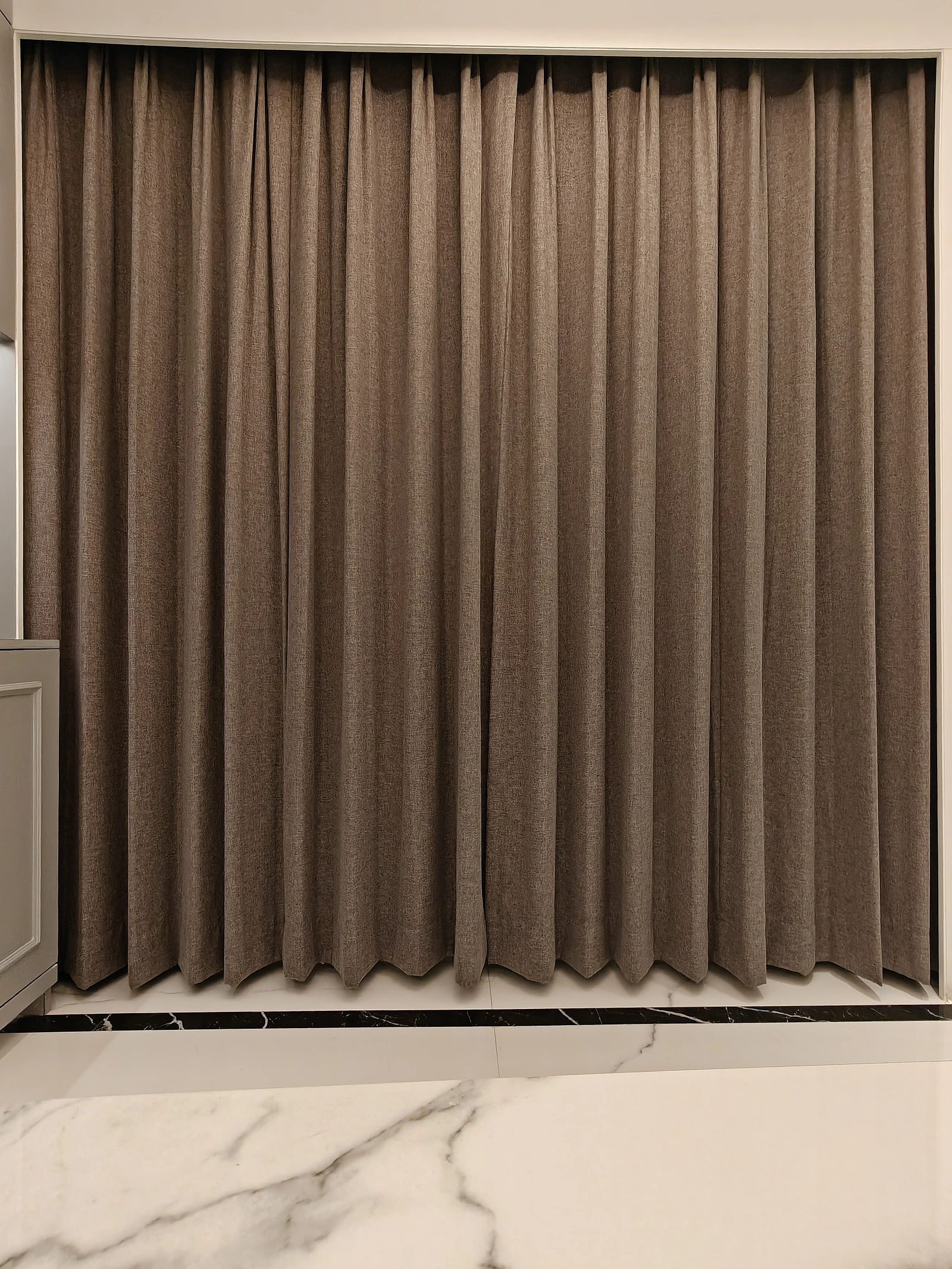
Plan curtain pockets, track dimensions, motor access, power points and control wiring before ceilings and joinery are finalised. The curtain supplier and automation integrator should coordinate the interface.
Early coordination is particularly important when the curtains need to disappear into a ceiling detail.
06Should every curtain be automated?
Not necessarily. The best approach is to prioritise rooms where automation adds real value: large living spaces, bedrooms, home theatres, double-height areas and hard-to-reach windows.
Budget can also be managed by creating scenes for priority zones while leaving low-use windows on conventional controls.
07Frequently Asked Questions
Can motorised curtains be controlled by KNX?
Yes, compatible curtain and blind systems can be integrated into a KNX-based automation architecture.
Do motorised curtains need Wi-Fi?
Not necessarily. The control method depends on the motor and automation architecture selected.
Can curtains be automated based on time?
Yes, schedules are a common automation method, subject to the project’s control logic.
Planning motorised curtains for a new home? Contact Control Valley early so curtain, electrical, interior and automation requirements can be coordinated together.
—Continue reading
- What Is KNX Home Automation? A Complete Guide for HomeownersWhat KNX home automation is, how it works, what it can control, and why it suits homes designed to stay useful for years.
- KNX vs Wi-Fi Smart Home: Which Is Better for a New Home?KNX vs Wi-Fi smart home explained: compare reliability, scalability, wiring, security, control, maintenance and cost before choosing automation for a new home.
- How Much Does Home Automation Cost in India? A Practical GuideUnderstand how home automation is priced in India, what shapes the budget, what a KNX project includes, and how to plan a realistic scope.